What Captain John Smith Saw and What Archaeologists Found: Recovering Rappahannock Indigenous History by Julia King, PhD, St. Mary’s College of Maryland
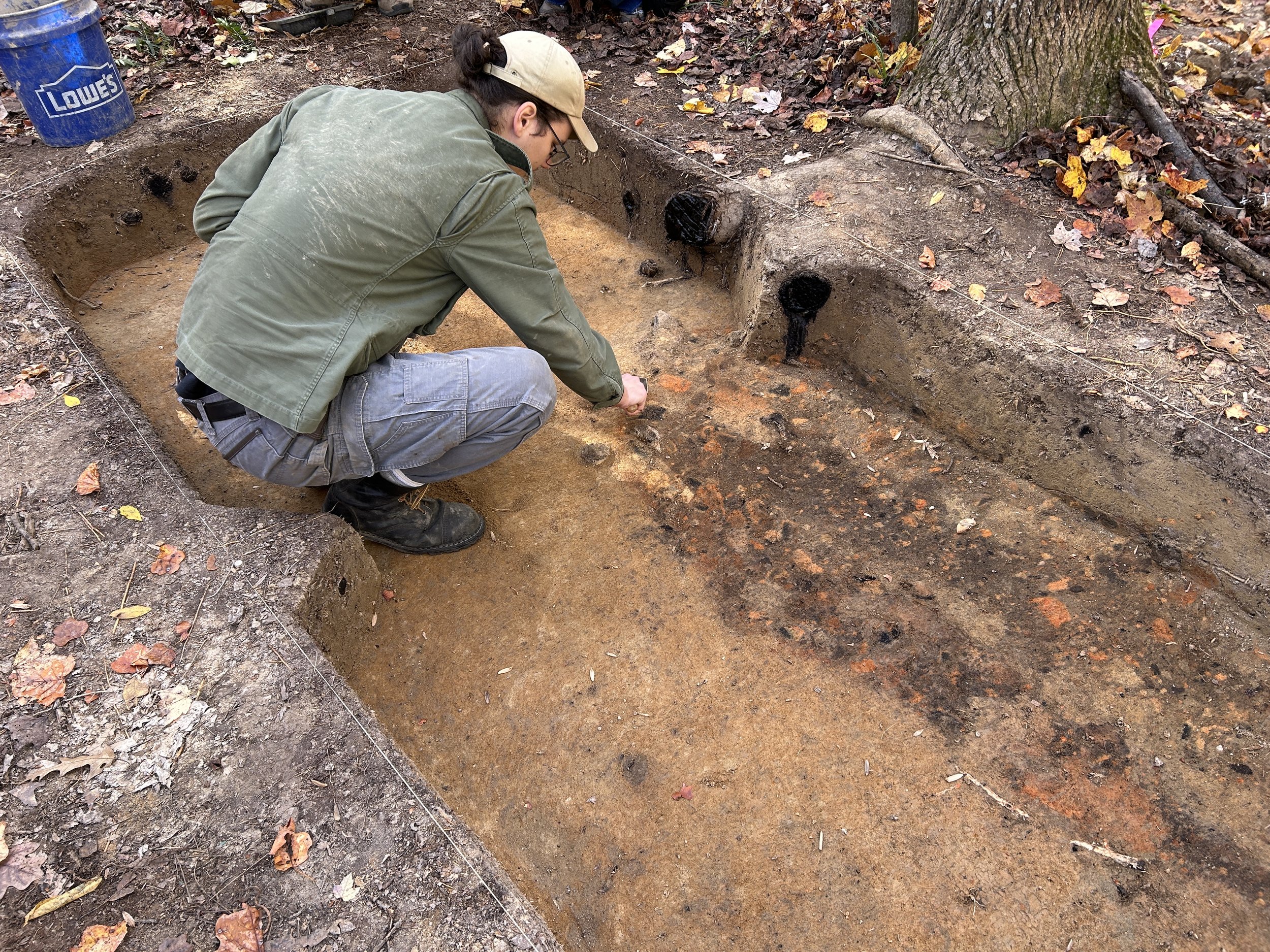
While mapping the Chesapeake Bay and its Indigenous communities in 1608 and 1609, Captain John Smith spent considerable time in the Rappahannock River valley where he engaged numerous Algonquian nations and had the first colonial encounter with the Mannahoacs, Siouan-speaking people to the west. With little archaeology undertaken in the Rappahannock valley until very recently, Smith's map and his descriptions have formed how archaeologists and historians have understood the region's Indigenous communities. Beginning in 2016, archaeologists from St. Mary's College of Maryland working with the Rappahannock Tribe are documenting the river valley's history, including the discovery -- and significant revision -- of the river valley's earliest colonial encounter.
Julia A. King is the George B. and Willma Reeves Endowed Chair in the Liberal Arts at St. Mary's College of Maryland, where she teaches in and chairs the anthropology department. King's research focus includes the early modern Atlantic through a Chesapeake lens and Indigenous cultures of the Chesapeake. She has held fellowships at Dumbarton Oaks, Winterthur Museum, and the National Humanities Center. In 2018, she received the J.C. Harrington Award from the Society for Historical Archaeology in recognition of her scholarship.
This lecture will be presented on Zoom. To attend you must pre-register.. Click HERE to register.